Active Recall vs. Passive Recognition: Why Multiple Choice Fails Language Learners
Language Lift Pedagogy Team
Our academic curriculum research group specializes in second language acquisition (SLA), task-based instruction, and CEFR-aligned learning progression.
The Illusion of Competence
Have you ever spent 30 minutes on a popular gamified language app, scored 100% on every exercise, and felt like a linguistic genius — only to freeze completely when asked a basic question by a native speaker an hour later?
This phenomenon is known in cognitive psychology as the Illusion of Competence. When you are presented with a multiple-choice question or a word bank of 4 pre-selected words:
- Your brain only needs to recognize the familiar pattern.
- The correct answer is already on the screen, acting as an external memory scaffold.
- Your cognitive load is minimal, producing a dopamine rush without structural memory consolidation.
What Cognitive Science Tells Us
In 2008, researchers Karpicke and Roediger published a landmark study in Science examining retrieval practice during learning. They divided students into groups testing different study strategies:
📚 Free Spaced-Repetition Study Schedule
Sign up today and get a linguist-designed study plan delivered to your inbox.
- Group 1: Repeated study (re-reading material)
- Group 2: Repeated testing with active recall (free retrieval without cues)
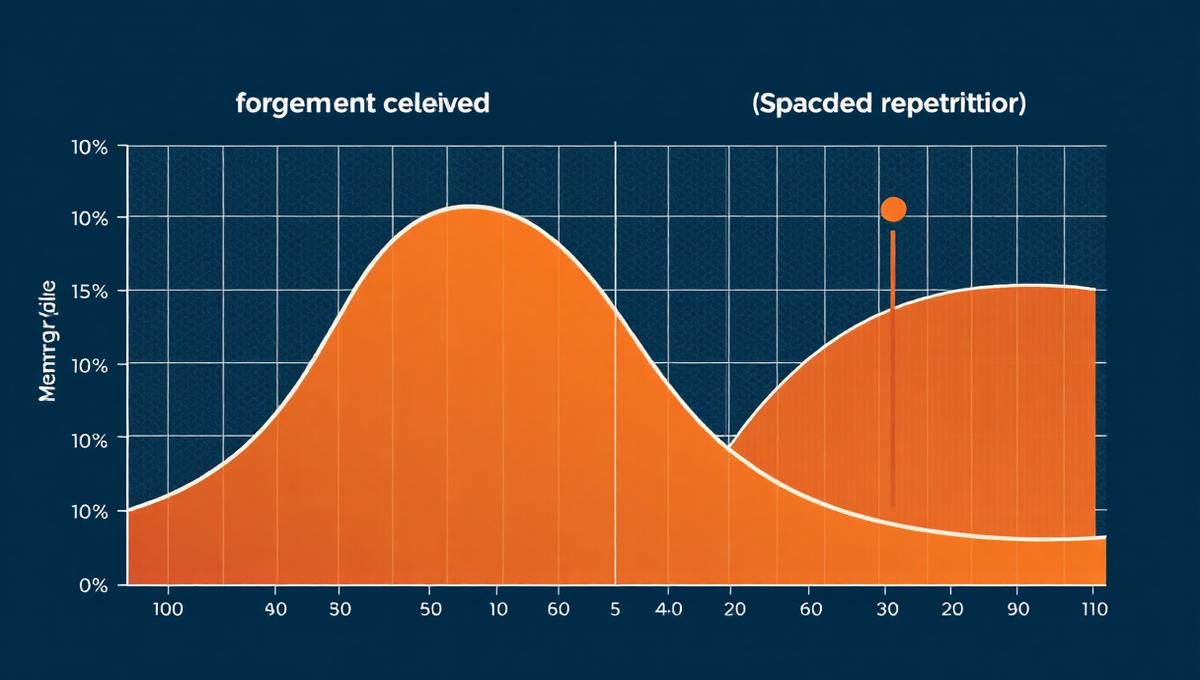
The results were astonishing: the active recall group retained over 400% more information after one week compared to the passive review group, despite spending the exact same total study time.
Recognition vs. Retrieval
| Metric | Passive Recognition (Multiple Choice) | Active Recall (Free Production) |
|---|---|---|
| Cognitive Trigger | Target stimulus is visible | Brain must search and reconstruct from scratch |
| Neural Synapse Strengthening | Weak; validates existing pathway | Strong; forces neuroplastic structural reinforcement |
| Real-World Transfer | Near zero in conversation | 100% directly mirrors natural speech production |
| Error Diagnosis | Concealed by lucky guesses | Clear, unambiguous visibility into knowledge gaps |
How to Apply Active Recall to Your German Practice
- Cover the Answer First: When reviewing vocabulary, never look at multiple-choice options. Cover them with your hand or use an app that requires typing.
- Produce Full Sentences: Do not just recall single isolated words. Speak or type complete clauses containing subject, verb, and proper case declensions.
- Use Speech Synthesis & Voice Input: Speaking out loud activates motor memory and auditory feedback loops in Broca's area.
At Language Lift, we specifically structured our 70+ exercise types around free recall and sentence production. Rather than clicking pre-assembled word bubbles, you write, conjugate, and speak German in authentic communicative scenarios.
Written by Language Lift Pedagogy Team
Our academic curriculum research group specializes in second language acquisition (SLA), task-based instruction, and CEFR-aligned learning progression.